The Damned at 50 Years
 Liz Worth
What it was like attending the Damned’s 50th anniversary show at Wembley Arena.
Music fandom is a spectrum. On one end, it can be soft and non-committal. You might like a band’s single, or one album. You might seek out a band’s albums, but not be bothered to see them live. Or maybe you see them once, and that’s enough.
And as you move further along that line, you find deeper levels of commitment: Owning the whole discography, reading every interview and biography, going to every show. Buying all the merch. Following every moment.
And somewhere along the way, you might travel to see a band you like a lot. You can’t do this for every band you like, though: It’s only certain artists that get the most dedicated treatment, if you’re even going to go to that length at all.
For me, the Damned became one of those bands this year. Having been my favourite punk band since I first heard them, I immediately wanted to be at their 50th anniversary show at Wembley Arena in London when it was announced in late 2025.
It’s always a risk to travel to see a band, especially when airfare and hotels become involved. To go from Hamilton, Ontario, Canada to London, UK was a costly and time-consuming decision.
But this was a historical event. To celebrate a band’s 50th anniversary is incredibly special. Especially within a genre that lost so many of its founding members all too soon. And at this point, how many more milestone anniversaries are there left? Hopefully we’ll get to a 60th anniversary, but time is ticking on, isn’t it?
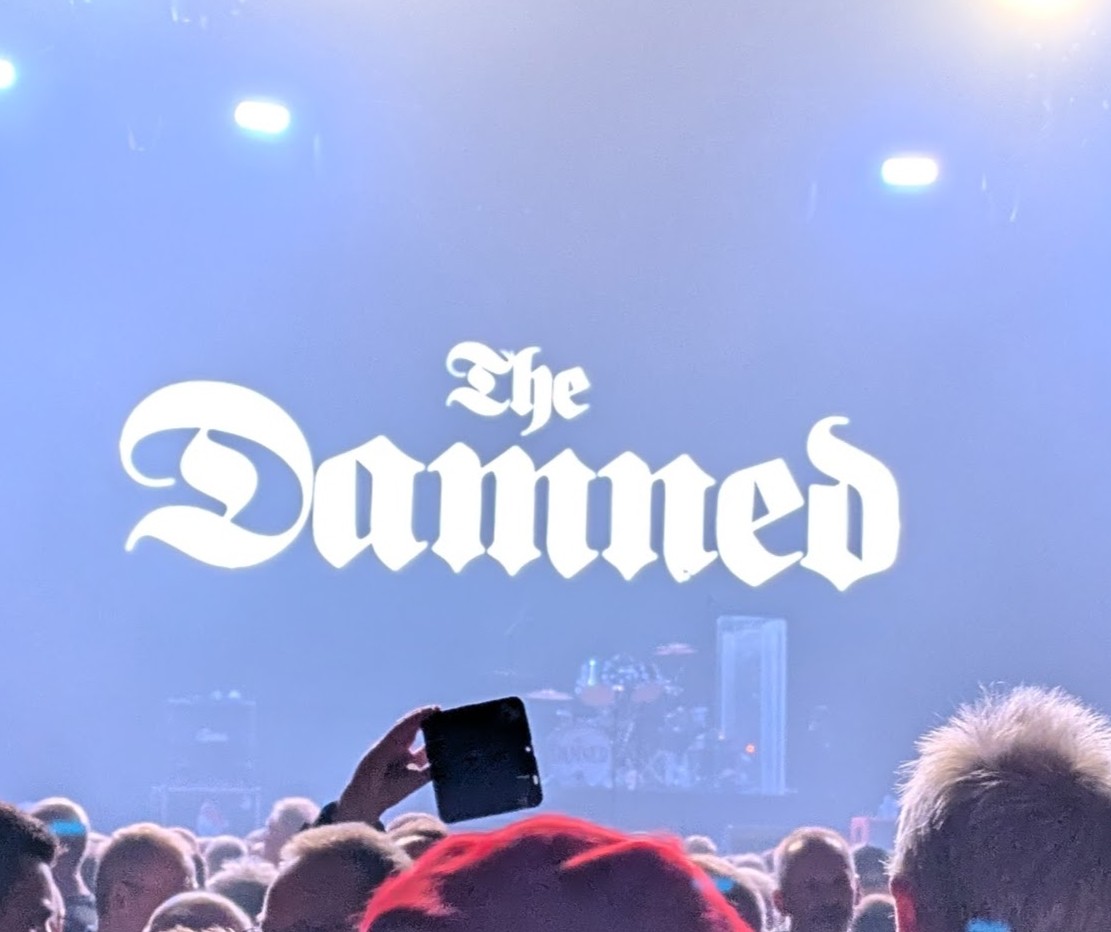
It’s easy to take artists for granted, but we shouldn’t. You never know when it’s going to be a band’s last time out, so if you enjoy seeing them in concert, do it when you can. Because we are only human, after all. Health deteriorates, and lives are cut short. The Damned are already one founding member down after the death of guitarist Brian James in 2025.
It’s also incredibly significant, in my opinion, that we are witnessing the 50th anniversary of punk. This movement has altered popular culture permanently; its influence is everywhere. It has pervaded fashion, music, and mindset to the point where punk, in some aspects, has become commonplace.
Having been born in 1982, and having become obsessed with first-wave and post-punk as a teenager in the mid-1990s, I came of age believing that all of the music and culture that I was most interested in had passed me by. But the Damned are one of those bands that mostly remained active. I first saw them in the early 2000s on their Grave Disorder tour, where they played at the Horseshoe in Toronto, a remarkably small venue for a band that loomed large in my eyes.
A few years later, when 2007 rolled around, something incredible started to happen: The 30th anniversary of punk came along, and suddenly there was a buzz around 1970s punk again. Bands that I thought I’d never get to see, like Gang of Four, were suddenly on tour again. At that time, in Toronto, I was working on my book Treat Me Like Dirt, documenting the city’s first-wave punk scene, and many of those bands, like the Diodes and Viletones, also started to mount new shows.
Ever since, I’ve been following a certain musical trail, seeing as many of my favourite bands from the ‘70s and ‘80s as possible. Many are still active – some have never stopped, and others have reformed and kept it that way.
I’ve come to see these last three decades not as an endless nostalgia tour, but the continuation of a golden era of music. What started with bands like the Damned, the Cure, Bauhaus, Simple Minds, and so many more has stayed alive for the better part of half a century.
I might not have been around for these artists when they began, but I’m here now, and I’ve been doing everything I can to take advantage of the opportunity to see these bands while they are still here.
Even though I just saw the Damned in Toronto about eight months ago, when they were touring a lot of their ‘80s material (which is my favourite Damned era), I felt oddly emotional walking into Wembley Arena on Saturday, April 11, 2026. I kept thinking: This is a special day. This is only going to happen once.
Even though I think about every show that way: Performance is ephemeral, and is affected by so much more than setlist. It’s the audience, the venue, the mood, the energy – everything will colour the flow.
And I was not surprised that others felt the same: I met people who’d traveled from Australia, Wales, and Germany to be there, and we all kept saying, “This is a big occasion.”
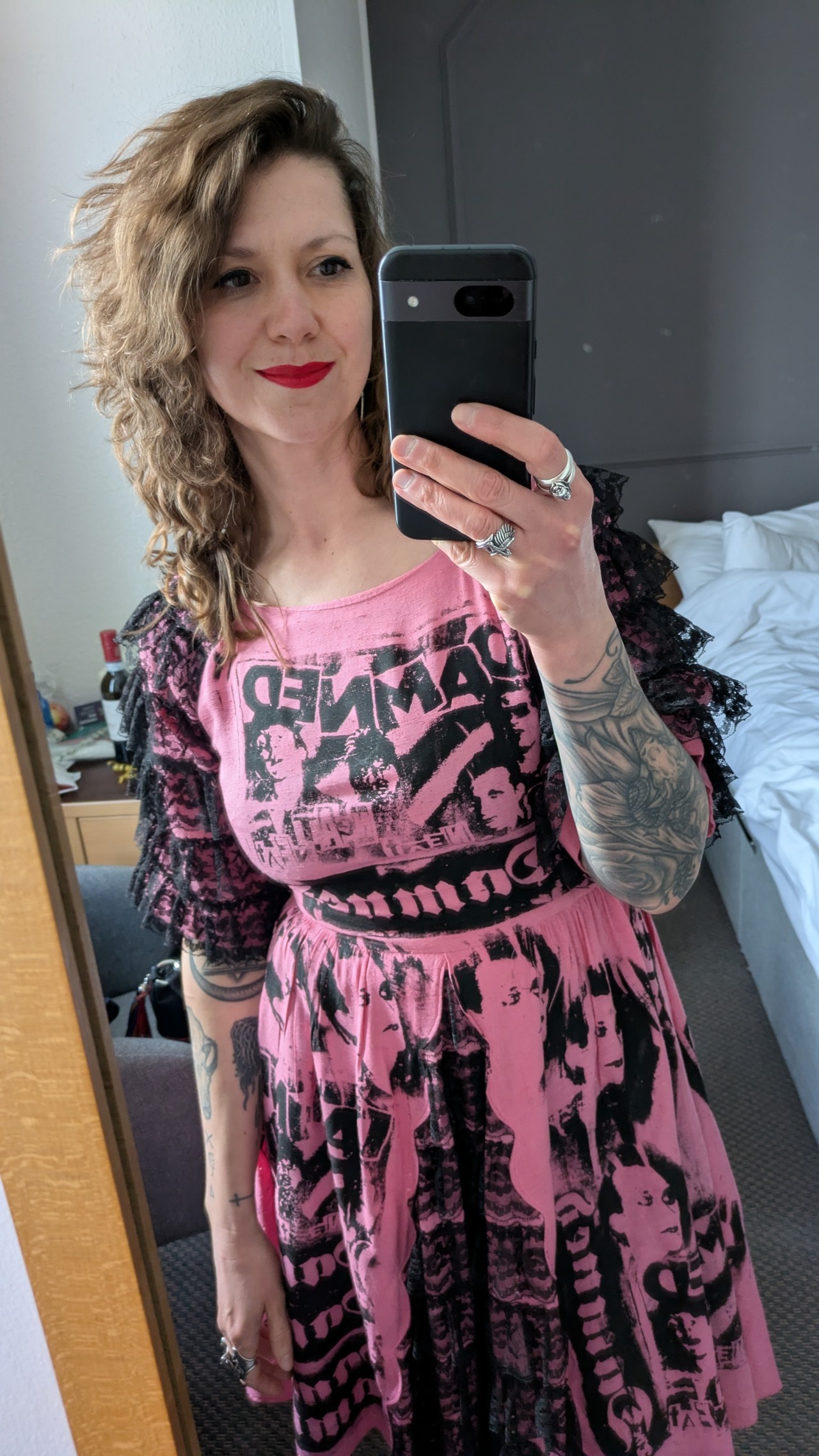
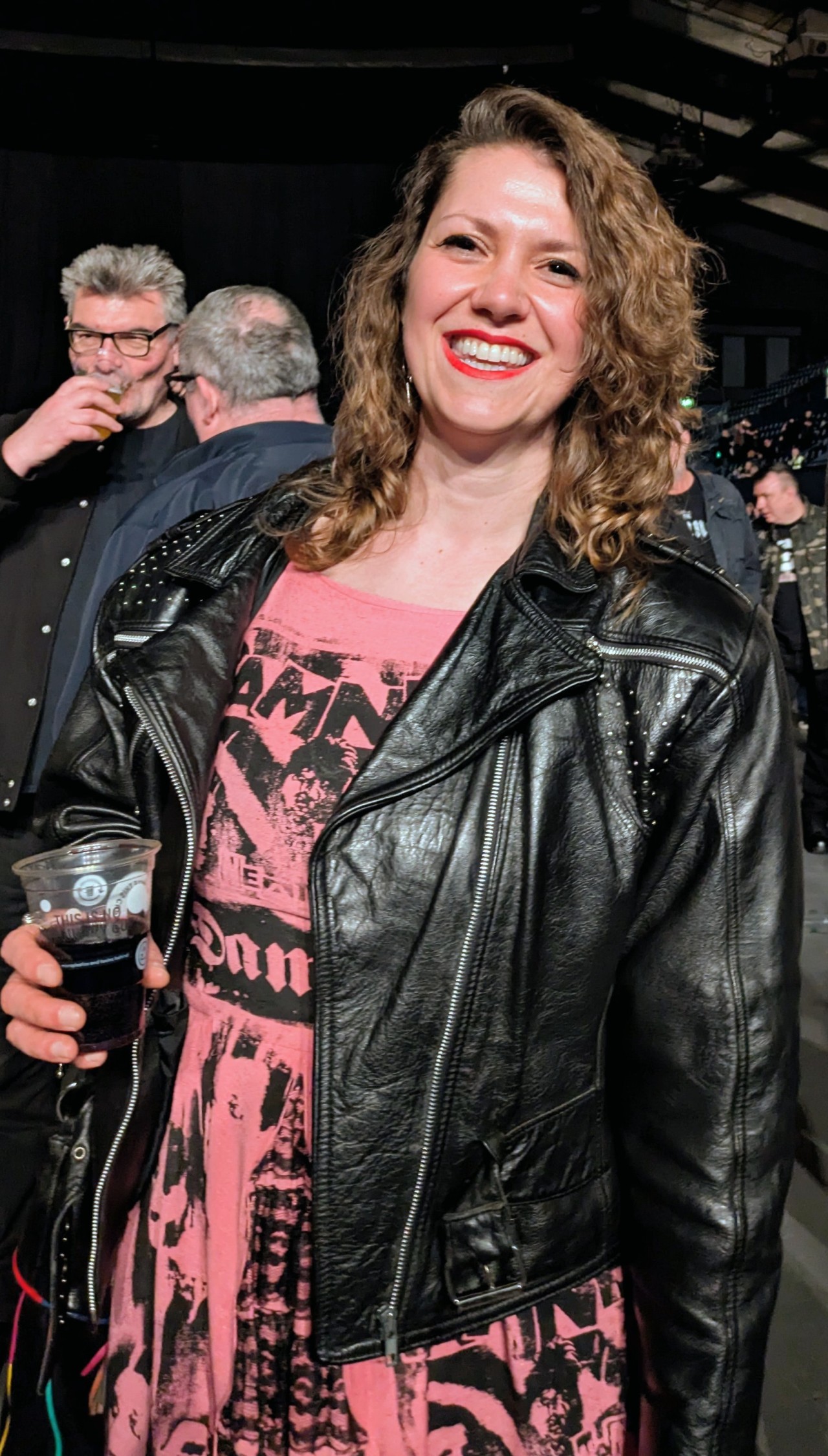
Heck, I even screen printed my own Damned dress just for the concert!
The Damned are an acquired taste. As I’ve written about before, they are mainly considered a punk band but really only put out one solid punk album – their 1977 Damned Damned Damned record. With varied influences and sweeping talent, the Damned were never satisfied to stay in punk’s stripped down, three-chord world. To be a Damned fan means to embrace the band’s gothic, psych, prog, ‘50s rock, ‘60s garage, and rockabilly inclinations, too. Just look at the songs they’ve covered: “White Rabbit” by Jefferson Airplane, “Eloise” by Barry Ryan, and “Help” by the Beatles, to name a few.
Their set at Wembley was an apt representation of the Damned’s favourite flavours. While I expected the set to heavily reflect their 1977 debut, I was pleasantly surprised that they leaned strongly into material from Machine Gun Etiquette, Strawberries, and The Black Album. My favourite Damned record, Phantasmagoria, got a bit of representation, too, with “Street of Dreams” and “Is It a Dream?” Sadly, the one song I was hoping to hear, “Shadow of Love” was noticeably absent, but what can you do? The Damned have a lot of material – they could have played all night.
Opening with “Wait for the Blackout” and getting straight into “The History of the World (Part 1)” was a strong introduction to how the night was going to go. While sound at arena shows can be hit or miss, Wembley’s sound system was solid, fully highlighting the strength of each band member and keeping Dave Vanian’s deep, crooning voice soaring high.
“Eloise” and “Smash It Up” were also highlights, but “Curtain Call” was certainly a standout moment. It’s an epic song that feels perfectly suited to the Damned, summing up their penchant for drama and mystery, and sweeping song structure that takes you to all kinds of dark and intriguing places.
There were only a few songs off Damned Damned Damned - “Neat Neat Neat,” “Fan Club,” and “New Rose,” which was fine by me: I was much more excited to hear “Love Song” and “Machine Gun Etiquette.”
After a two-hour set with a short intermission, the Damned closed “New Rose” before taking a final bow. There was no encore, though Vanian broke into an acapella version of “Wish Me Luck as You Wave Me Goodbye,” a beautiful rendition that demonstrated the true strength of his voice: Vanian can hold his own without the noise of a band around him. Whether this was planned or impromptu, I’m not sure, but it felt like a bittersweet closure all the same, reminding us that this was a one-time deal.
Concerts can be rituals if you want them to be. The gathering of people for a shared passion, the clapping, dancing, chanting along. The shared intention to live fully in the moment. The collective adoration for the artists as (momentary) idols.
Whether you feel it in the moment or not, music can change you. Giving your trust over to a band to take you on a journey means opening yourself to the possibility of being transformed by a musician’s hand. The Damned changed me the first time I heard them, opening up me up to British music in a way that other bands hadn’t before.
They changed me again at Wembley, through the chance to say yes to an experience that I would not have had otherwise. And through the chance to learn what their music really means to me, and to so many others.
Hopefully we can do it again some day <3
Categories: : punk, the damned